Overview
Delphinium nudicaule is a columnar upright herbaceous perennial in the genus Delphinium, part of the Ranunculaceae family, with deciduous foliage. Delphinium nudicaule grows best in full sun, and tolerates most soils and any pH. Its UK hardiness is rated H5. Suggested uses include cottage and informal garden and wildlife gardens.
About
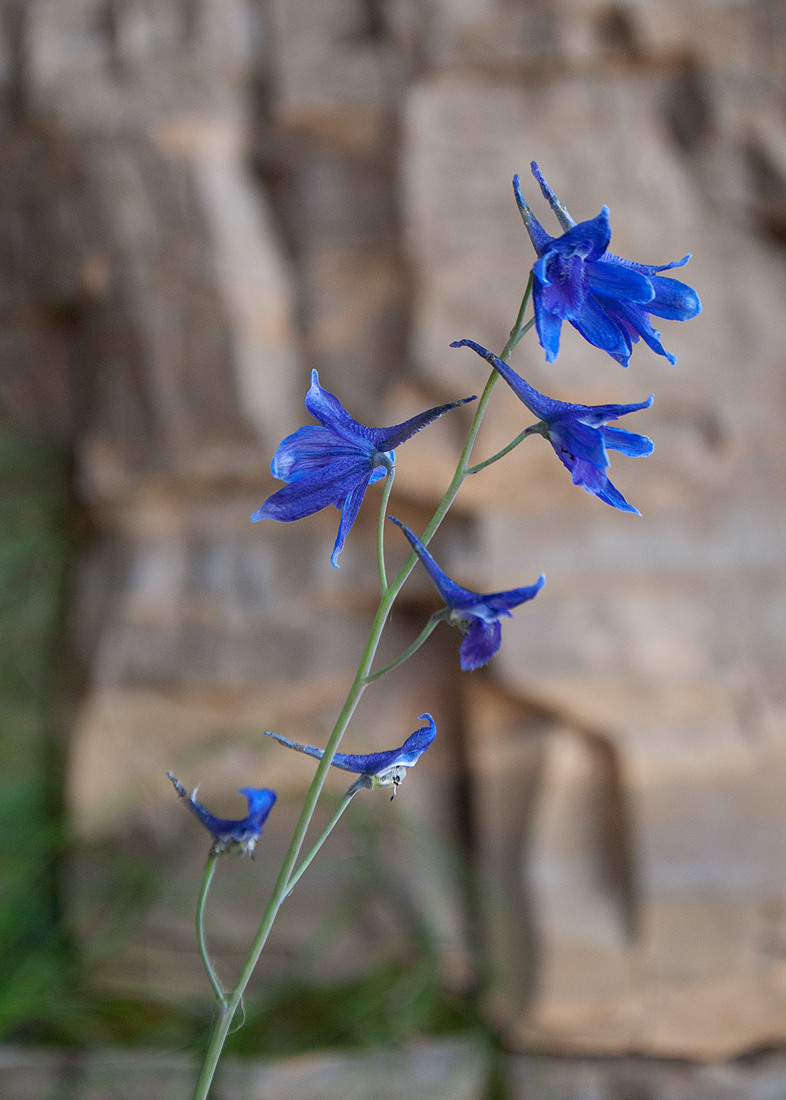
Delphinium nudicaule, known by the common names canyon larkspur, red larkspur, orange larkspur, and canyon delphinium, is a flowering herbaceous perennial plant in the buttercup family Ranunculaceae. It is native to low-elevation canyons and slopes, foothills, and mountain ranges of California, US, from the Sierra Nevada to the California Coast Ranges, and of Oregon. It grows below 6,500 feet (2,000 m). It bears attractive larkspur flowers in shades of red and orange that are generally pollinated by hummingbirds. Grow it in full sun and most soil types. In UK gardens it is hardy in most of the UK (RHS H5). It works well for cottage and informal garden and wildlife gardens. It tolerates soil of any pH, moist but well-drained, well-drained conditions and south-facing, east-facing and west-facing aspects.
Wikipedia contributors, CC BY-SA 4.0 — Delphinium nudicaule
About the genus
Delphinium is a genus of about 300 species of annual and perennial flowering plants in the family Ranunculaceae, native throughout the Northern Hemisphere and also on the high mountains of tropical Africa. The genus was erected by Carl Linnaeus.
Wikipedia contributors, "Delphinium", CC BY-SA 4.0 — Delphinium
Growing conditions
Best soil and position for Delphinium
- Sunlight
- Full sun
- Soil type
- Chalk, Clay, Loam, Sand
- Soil pH
- Acid, Alkaline, Neutral
- Soil moisture
- Moist but well-drained, Well-drained
- Aspect
- South-facing, East-facing, West-facing
- Exposure
- Sheltered
- UK hardiness
- H5
Plant details
Delphinium nudicaule size, habit and characteristics
- Plant type
- Herbaceous Perennial
- Habit
- Columnar upright
- Foliage
- Deciduous
- Suggested uses
- Cottage and informal garden, Wildlife gardens
Care notes
Pruning and caring for Delphinium nudicaule
- Propagation
- Propagate by taking pencil thick basal cuttings in early spring or propagate by seed in spring or autumn (cultivars will not come true)
- Pest resistance
- May be susceptible to aphids, earwigs, delphinium leaf miner, delphinium moth caterpillars, slugs, snails and caterpillars
- Disease resistance
- May be susceptible to powdery mildews, delphinium black blotch, crown rot and viruses
Frequently asked questions
Where is the best place to plant Delphinium nudicaule?
Delphinium nudicaule prefers full sun. It suits sheltered positions.
What soil does Delphinium nudicaule need?
Delphinium nudicaule is adaptable and grows happily in most soil types, including chalk, clay, loam and sand. It is happy in soil of any pH. Aim for soil that stays moist but well-drained to well-drained.
Is Delphinium nudicaule hardy in the UK?
Delphinium nudicaule has an RHS hardiness rating of H5, meaning it is hardy in most of the UK, tolerating -15 to -10°C.
How do I propagate Delphinium nudicaule?
Propagate by taking pencil thick basal cuttings in early spring or propagate by seed in spring or autumn (cultivars will not come true).
More in the Delphinium genus
- Delphinium 'Nora Ferguson'Larkspur

- Delphinium Hybrids, BelladonnaLarkspur

- Delphinium cheilanthumgarland larkspur
- Delphinium grandiflorum 'Hunky Dory White'Siberian Larkspur

- Delphinium requieniiLarkspur

- Delphinium tatsienenseLarkspur

- Delphinium × ruysii 'Pink Sensation'delphinium 'Pink Sensation'

- Delphinium 'Centurion White' (Centurion Series)delphinium 'Centurion White'