Overview
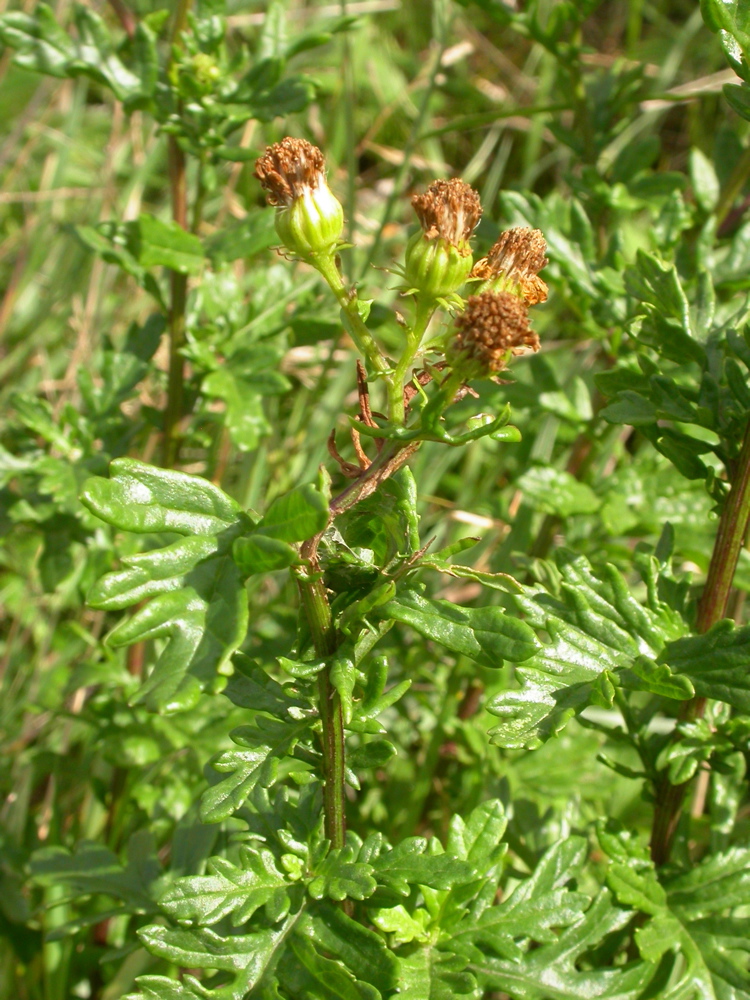
Jacobaea vulgaris is a plant with a clump forming, columnar upright habit in the genus Jacobaea, part of the Asteraceae family, with deciduous foliage. Jacobaea vulgaris grows best in full sun, and tolerates loam soils and neutral pH. Its UK hardiness is rated H7. Suggested uses include wildlife gardens and wildflower meadows. It is native to Liechtenstein, Germany, Northern Ireland, Romania, Ukraine, Montenegro, Belgium and Netherlands.
About
Jacobaea vulgaris (Common ragwort) is a clump-forming, columnar upright perennial belonging to the Asteraceae family. It has deciduous foliage and thrives best in full sun, ideally in south- or west-facing positions. This cultivar prefers well-drained loam soil with a neutral pH and can tolerate both exposed and sheltered locations. Hardy to UK zone H7, it is suitable for wildlife gardens and wildflower meadows. Propagation is possible through seed, offsets, or root fragments.
About the genus
Jacobaea is a genus of flowering plants in the tribe Senecioneae and the family Asteraceae. Its members used to be placed in the genus Senecio, but have been separated into the segregate genus Jacobaea on the basis of molecular phylogenetics in order to maintain genera that are monophyletic.
Wikipedia contributors, "Jacobaea", CC BY-SA 4.0 — Jacobaea
Growing conditions
Best soil and position for Jacobaea
- Sunlight
- Full sun
- Soil type
- Loam
- Soil pH
- Neutral
- Soil moisture
- Well-drained
- Aspect
- South-facing, West-facing
- Exposure
- Exposed, Sheltered
- UK hardiness
- H7
Plant details
Jacobaea vulgaris size, habit and characteristics
- Habit
- Clump forming, Columnar upright
- Foliage
- Deciduous
- Suggested uses
- Wildlife gardens, Wildflower meadows
- Native to
- Liechtenstein, Germany, Northern Ireland, Romania, Ukraine, Montenegro, Belgium, Netherlands
Care notes
Pruning and caring for Jacobaea vulgaris
- Propagation
- Seed, Offsets, Root fragments
- Pest resistance
- Generally pest-free
- Disease resistance
- Generally disease-free
Frequently asked questions
Where is the best place to plant Jacobaea vulgaris?
Jacobaea vulgaris prefers full sun. It suits exposed and sheltered positions.
What soil does Jacobaea vulgaris need?
Jacobaea vulgaris grows best in loam soil. It prefers neutral soil. Aim for soil that stays well-drained.
Is Jacobaea vulgaris hardy in the UK?
Jacobaea vulgaris has an RHS hardiness rating of H7, meaning it is fully hardy throughout the UK, tolerating temperatures below -20°C.
How do I propagate Jacobaea vulgaris?
Seed, Offsets, Root fragments.