Overview
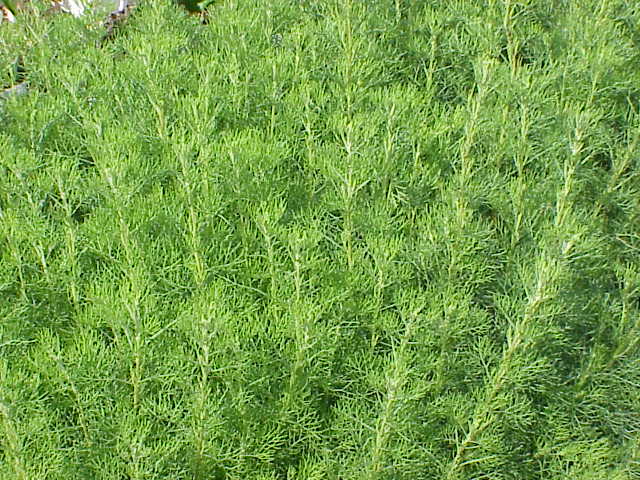
Artemisia 'Valerie Finnis' is a plant with a bushy, upright, rhizomatous, clump-forming habit in the genus Artemisia, part of the Asteraceae family, with deciduous, aromatic, silver-grey, divided foliage. Artemisia 'Valerie Finnis' grows best in full sun, and tolerates most soils and any pH. Its UK hardiness is rated H6. Suggested uses include culinary and medicinal.
About
Artemisia 'Valerie Finnis' is a clump-forming Artemisia with aromatic, silver-grey divided foliage and an upright, multi-stemmed habit. It spreads by short rhizomes and forms a durable perennial mound. Flowering occurs from July to September, but the foliage is the main feature in cultivation.
About the genus
Artemisia is a large, diverse genus of plants belonging to the daisy family, Asteraceae, with almost 500 species. Common names for various species in the genus include mugwort, wormwood, and sagebrush.
Wikipedia contributors, "Artemisia (plant)", CC BY-SA 4.0 — Artemisia (plant)
In the garden
Artemisia 'Valerie Finnis' belongs to the Asteraceae and is grown for its strongly aromatic, silver-grey divided leaves rather than showy blooms. It forms an upright, multi-stemmed clump and spreads by short rhizomes, so place it where a clump-former fits the design and can be contained if needed. Flowering takes place from July to September, though the foliage remains the primary ornamental asset. Plant in full sun on freely draining soils such as loam, sand or chalk; it tolerates acid, neutral and alkaline pH. Choose a south- or west-facing, sheltered spot to avoid winter wet around the crown. It is rated H6 (very hardy) in the UK but prefers soils that do not stay waterlogged, so improve drainage or use a raised bed on heavy ground. In the garden, use it where silvery texture and scent are useful: herb beds, the sunnier edge of mixed borders or planted with other Mediterranean-style perennials. Practical care is limited to removing winter debris, cutting back in spring and dividing clumps if they thicken. Harvest leaves sparingly for culinary use and dry stems for medicinal preparations to make the most of its aromatic foliage.
Growing conditions
Best soil and position for Artemisia
- Sunlight
- Full sun
- Soil type
- Loam, Sand, Chalk
- Soil pH
- Acid, Alkaline, Neutral
- Soil moisture
- Well-drained
- Aspect
- South-facing, West-facing
- Exposure
- Sheltered
- UK hardiness
- H6
Plant details
Artemisia 'Valerie Finnis' size, habit and characteristics
- Habit
- Bushy, Upright, Rhizomatous, Clump-forming
- Foliage
- Deciduous, Aromatic, Silver-grey, Divided
- Suggested uses
- Culinary, Medicinal
Care notes
Pruning and caring for Artemisia 'Valerie Finnis'
- Propagation
- Seed, Root stem tips, Heeled sideshoots, Division
- Pest resistance
- Aphids, Gall midge
- Disease resistance
- Honey fungus
Frequently asked questions
Where is the best place to plant Artemisia 'Valerie Finnis'?
Artemisia 'Valerie Finnis' prefers full sun. It suits sheltered positions.
What soil does Artemisia 'Valerie Finnis' need?
Artemisia 'Valerie Finnis' is adaptable and grows happily in most soil types, including loam, sand and chalk. It is happy in soil of any pH. Aim for soil that stays well-drained.
Is Artemisia 'Valerie Finnis' hardy in the UK?
Artemisia 'Valerie Finnis' has an RHS hardiness rating of H6, meaning it is very hardy, tolerating -20 to -15°C across most of the UK.
How do I propagate Artemisia 'Valerie Finnis'?
Seed, Root stem tips, Heeled sideshoots, Division.
More in the Artemisia genus
- Artemisia 'Coca Cola'
- Artemisia Pontica Roman Wormwood

- Artemisia lactiflora 'Elfenbein'White Mugwort

- Artemisia schmidtiana 'Nana'Silver Mound

- Artemisia 'Boughton Silver'
- Artemisia Indica var. Momiyamae