Overview
Artemisia lactiflora 'Elfenbein' is a plant with a bushy, upright, rhizomatous, clump-forming habit in the genus Artemisia, part of the Asteraceae family, with deciduous, aromatic, silver-grey, divided foliage. Artemisia lactiflora 'Elfenbein' grows best in full sun, and tolerates most soils and any pH. Its UK hardiness is rated H6. Suggested uses include culinary and medicinal.
About
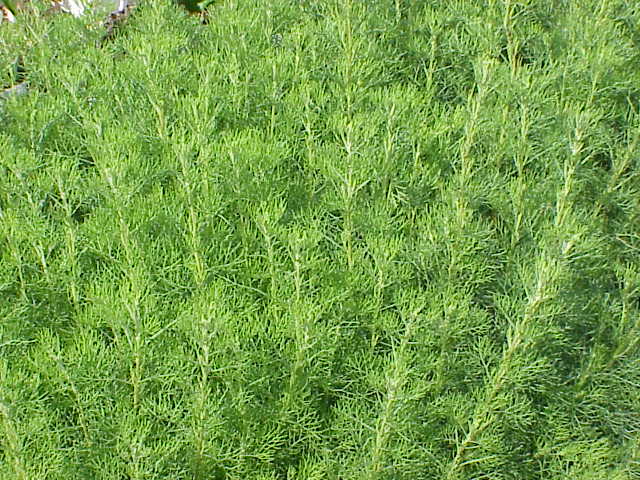
An upright, clump-forming perennial in the daisy family, Artemisia lactiflora 'Elfenbein' carries creamy-white flower plumes in mid to late summer. The plant has divided, silver-grey aromatic leaves that die back in winter. It favours full sun on well-drained loam, sand or chalk and performs best in a sheltered, south- or west-facing spot.
About the genus
Artemisia is a large, diverse genus of plants belonging to the daisy family, Asteraceae, with almost 500 species. Common names for various species in the genus include mugwort, wormwood, and sagebrush.
Wikipedia contributors, "Artemisia (plant)", CC BY-SA 4.0 — Artemisia (plant)
In the garden
An upright, clump-forming perennial in the Asteraceae, Artemisia lactiflora 'Elfenbein' produces creamy-white plumes from July to September above a mass of divided, aromatic silver-grey foliage. Its habit is rhizomatous and upright, forming a lasting clump rather than a loose spread. The foliage is deciduous and the plant suits sunny, sheltered positions where the wind is reduced. Plant on well-drained loam, sand or chalk; pH can range from acid to alkaline or neutral without issue. Give a south- or west-facing site for the best display and avoid heavy, damp ground as the plant prefers free-draining conditions. Hardiness is H6, which translates as very hardy across most of the UK when established. Leaves are aromatic and the plant has recorded culinary and medicinal uses, so location near paths or terraces allows you to appreciate the scent. In the garden it works as a structural, long-term clump at the middle or rear of a sunny border or beside gravel paths where drainage is good. Allow the creamy-white plumes to remain through September to provide late-season presence and to show the character of the silver-grey foliage.
Growing conditions
Best soil and position for Artemisia
- Sunlight
- Full sun
- Soil type
- Loam, Sand, Chalk
- Soil pH
- Acid, Alkaline, Neutral
- Soil moisture
- Well-drained
- Aspect
- South-facing, West-facing
- Exposure
- Sheltered
- UK hardiness
- H6
Plant details
Artemisia lactiflora 'Elfenbein' size, habit and characteristics
- Habit
- Bushy, Upright, Rhizomatous, Clump-forming
- Foliage
- Deciduous, Aromatic, Silver-grey, Divided
- Suggested uses
- Culinary, Medicinal
Care notes
Pruning and caring for Artemisia lactiflora 'Elfenbein'
- Propagation
- Seed, Root stem tips, Heeled sideshoots, Division
- Pest resistance
- Aphids, Gall midge
- Disease resistance
- Honey fungus
Frequently asked questions
Where is the best place to plant Artemisia lactiflora 'Elfenbein'?
Artemisia lactiflora 'Elfenbein' prefers full sun. It suits sheltered positions.
What soil does Artemisia lactiflora 'Elfenbein' need?
Artemisia lactiflora 'Elfenbein' is adaptable and grows happily in most soil types, including loam, sand and chalk. It is happy in soil of any pH. Aim for soil that stays well-drained.
Is Artemisia lactiflora 'Elfenbein' hardy in the UK?
Artemisia lactiflora 'Elfenbein' has an RHS hardiness rating of H6, meaning it is very hardy, tolerating -20 to -15°C across most of the UK.
How do I propagate Artemisia lactiflora 'Elfenbein'?
Seed, Root stem tips, Heeled sideshoots, Division.
More in the Artemisia genus
- Artemisia 'Coca Cola'
- Artemisia 'Valerie Finnis'

- Artemisia Pontica Roman Wormwood

- Artemisia schmidtiana 'Nana'Silver Mound

- Artemisia 'Boughton Silver'
- Artemisia Indica var. Momiyamae