Overview
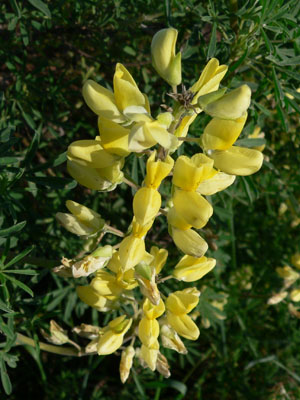
Lupinus angustifolius 'Haagena' is a clump forming, upright, bushy herbaceous perennial in the genus Lupinus, part of the Fabaceae family, with deciduous foliage. Lupinus angustifolius 'Haagena' grows best in full sun, and tolerates loam and sand soils and acid and neutral pH. Its UK hardiness is rated H5. Suggested uses include flower borders and beds, cottage and informal garden, coastal, patio and container plants and cut flowers.
About
Lupinus angustifolius is a species of lupin known by many common names, including narrowleaf lupin, narrow-leaved lupin and blue lupin. It is native to Eurasia and northern Africa and naturalized in parts of Australia and North America.
About the genus
Lupinus, commonly known as lupin, lupine, or regionally bluebonnet, is a genus of plants in the legume family Fabaceae. The genus includes over 199 species, with centres of diversity in North and South America. Smaller centres occur in North Africa and the Mediterranean.
Wikipedia contributors, "Lupinus", CC BY-SA 4.0 — Lupinus
Growing conditions
Best soil and position for Lupinus
- Sunlight
- Full sun
- Soil type
- Loam, Sand
- Soil pH
- Acid, Neutral
- Soil moisture
- Well-drained
- Aspect
- South-facing, East-facing, West-facing
- Exposure
- Sheltered
- UK hardiness
- H5
Plant details
Lupinus angustifolius 'Haagena' size, habit and characteristics
- Plant type
- Herbaceous Perennial
- Habit
- Clump forming, Upright, Bushy
- Foliage
- Deciduous
- Suggested uses
- Flower borders and beds, Cottage and informal garden, Coastal, Patio and container plants, Cut flowers
Care notes
Pruning and caring for Lupinus angustifolius 'Haagena'
- Propagation
- Seed sown in situ in late spring, Seedbeds and transplanted to final flowering site in autumn, Basal stem cuttings
- Pest resistance
- Slugs, Lupin aphid
- Disease resistance
- Powdery mildews, Rots, Leaf spot, Virus
Frequently asked questions
Where is the best place to plant Lupinus angustifolius 'Haagena'?
Lupinus angustifolius 'Haagena' prefers full sun. It suits sheltered positions.
What soil does Lupinus angustifolius 'Haagena' need?
Lupinus angustifolius 'Haagena' grows best in loam and sand soil. It prefers acid and neutral soil. Aim for soil that stays well-drained.
Is Lupinus angustifolius 'Haagena' hardy in the UK?
Lupinus angustifolius 'Haagena' has an RHS hardiness rating of H5, meaning it is hardy in most of the UK, tolerating -15 to -10°C.
How do I propagate Lupinus angustifolius 'Haagena'?
Seed sown in situ in late spring, Seedbeds and transplanted to final flowering site in autumn, Basal stem cuttings.
From the Fenn Plants journal
- Notes on DaffodilsWhen to plant daffodil bulbs in the UK, how deep, how to naturalise them in grass, why daffodils stop flowering (“blindness”), and why you should never mix cut daffodils with other flowers.
- Keeping Your NerveHow to garden through a heatwave — the best time to water, why deep soaks beat daily sprinkles, caring for pots and vulnerable plants, and why you can let the lawn go brown.
- Made to LastHow to clean, store and protect garden pots and planters — the frost-proof vs frost-resistant difference, winter care for terracotta and ceramic, and how to reuse a broken pot.
More in the Lupinus genus
- Lupinus albifronssilver lupine

- Lupinus arboreustree lupin
- Lupinus polyphyllusbigleaf lupin

- Lupinus polyphyllus 'Downer's Delight'Large-Leaved Lupine
- Lupinus polyphyllus 'Pink Pearls'Garden Lupin
- Lupinus albifrons var. douglasiiSilver Lupine
- Lupinus ornatusLupin