About the genus
Inula is a genus of about 80 species of flowering plants in the family Asteraceae, native to Europe, Asia and Africa.
Wikipedia contributors, "Inula", CC BY-SA 4.0 — Inula
In the garden
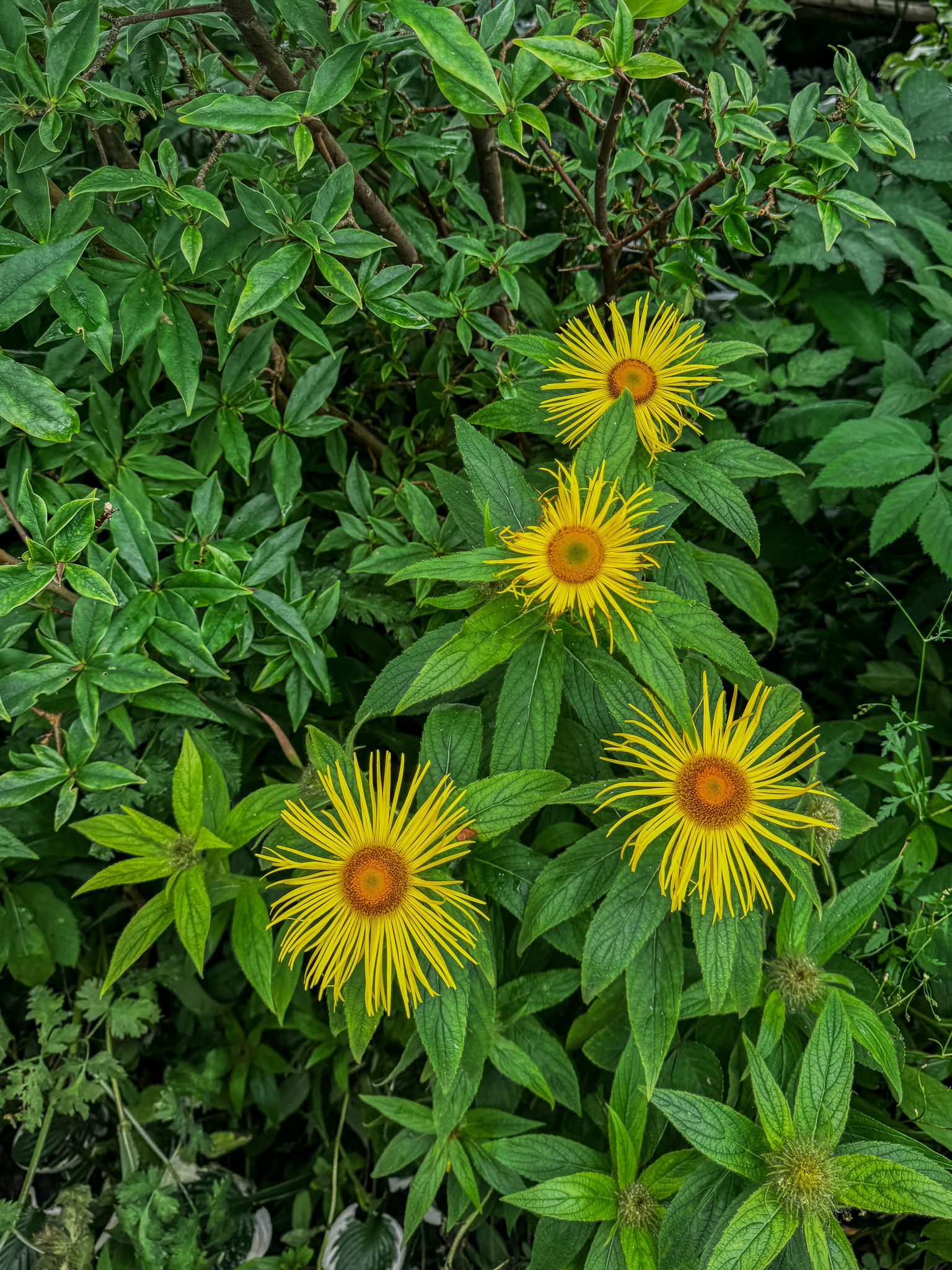
Inula glandulosa sits within the genus Inula (family Asteraceae) and exhibits the composite flowerheads characteristic of that family. Precise distribution, form and colour vary by taxon, so consult herbarium records or the nursery description for provenance and exact identification. Requirements vary across Inula species, so check the plant label or nursery for precise sunlight, soil and hardiness information before planting. Propagation methods differ between seed-raised, division and container-grown stock; the supplier will state which applies and that information should guide the planting season and early care. Match planting depth and aftercare to the material you buy rather than assuming a single routine for every Inula. Place specimens where summer flowering is wanted, coordinating the display with other perennials that bloom from mid to late summer. Retain dried flowerheads only if you need seed or a botanical record; otherwise remove spent stems to tidy the area after flowering. Expect blooms from July to September.
From the Fenn Plants journal
- Notes on DaffodilsWhen to plant daffodil bulbs in the UK, how deep, how to naturalise them in grass, why daffodils stop flowering (“blindness”), and why you should never mix cut daffodils with other flowers.
- Keeping Your NerveHow to garden through a heatwave — the best time to water, why deep soaks beat daily sprinkles, caring for pots and vulnerable plants, and why you can let the lawn go brown.
- Made to LastHow to clean, store and protect garden pots and planters — the frost-proof vs frost-resistant difference, winter care for terracotta and ceramic, and how to reuse a broken pot.
More in the Inula genus
- Inula Hookeri
- Inula ensifoliaSword-leaved Inula

- Inula magnificagiant inula

- Inula racemosaIndian elecampane

- Inula royleana

- Inula oculis-christi