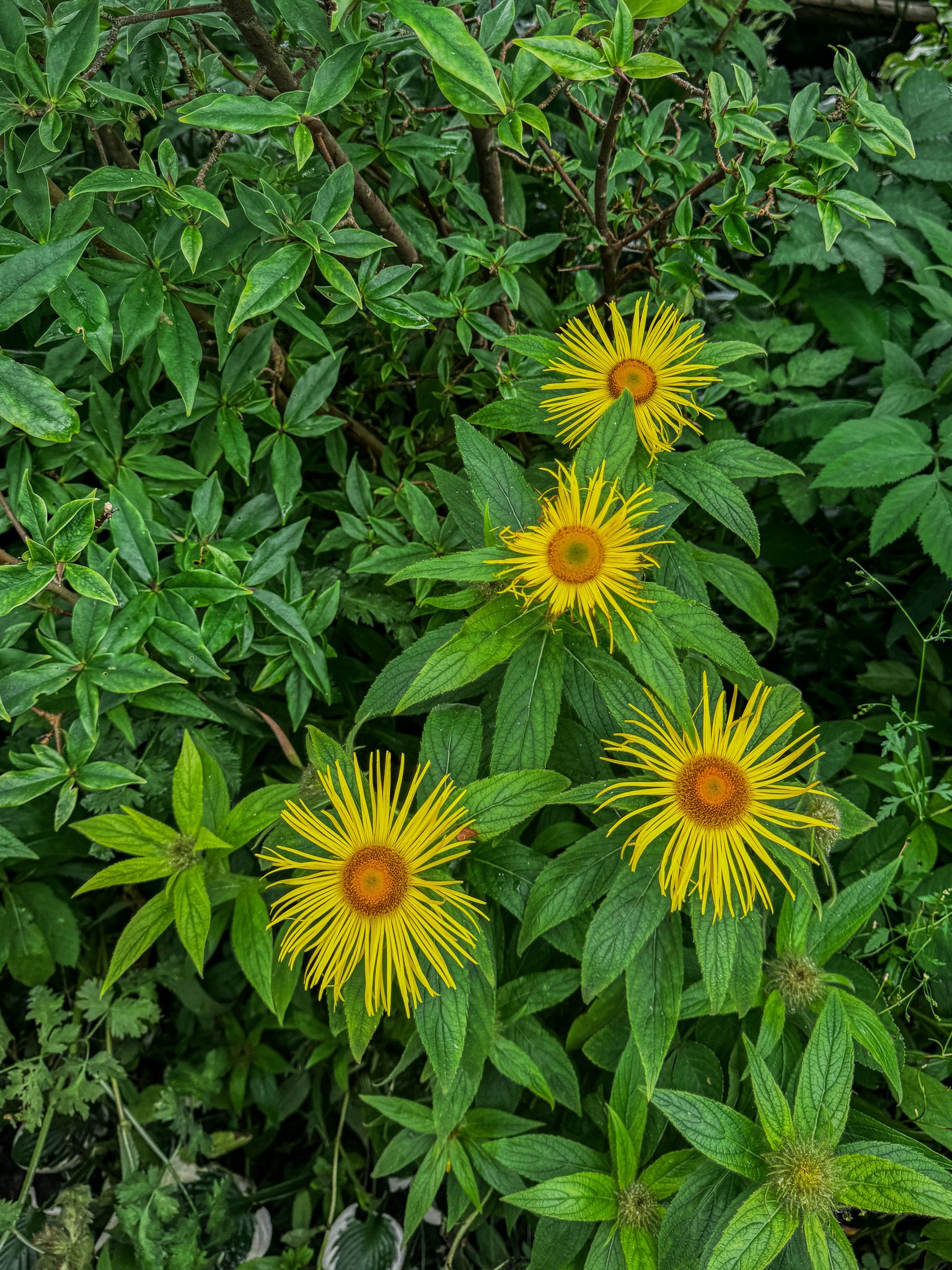
Overview
Inula ensifolia is a perennial in the genus Inula, part of the Asteraceae family. Inula ensifolia grows best in full sun and partial shade, and tolerates well-drained and sandy or loamy soils and neutral and alkaline pH. Its UK hardiness is rated H5. Suggested uses include rock gardens and borders. It is native to Europe and SW Asia.
About
Inula ensifolia is a perennial in the Asteraceae with narrow, sword-like leaves. It flowers in the UK from July to September. Plants perform best in well-drained sandy or loamy soils at neutral to alkaline pH and take full sun or partial shade. H5 hardiness means it will withstand most UK winters if sited in a sheltered spot.
About the genus
Inula is a genus of about 80 species of flowering plants in the family Asteraceae, native to Europe, Asia and Africa.
Wikipedia contributors, "Inula", CC BY-SA 4.0 — Inula
In the garden
Inula ensifolia is a perennial species native to Europe and south-west Asia, placed in the Asteraceae. Its foliage is dominated by narrow, sword-shaped leaves, and in the UK it comes into flower between July and September. Grow it where soil drains freely: sandy or loamy mixes suit it best and a neutral to alkaline pH is appropriate. Maintain moderate soil moisture rather than waterlogged conditions and give the plant a sheltered aspect to reduce exposure to harsh winds. Position plants in full sun or in partial shade depending on the site; brighter positions will encourage flowering while some light shade can protect it in exposed gardens. The H5 hardiness rating indicates it is hardy across much of the UK provided it has shelter from prevailing winds and does not sit in heavy, wet ground. Use Sword-leaved Inula in rock gardens and in the front to middle of borders where well-drained soil is available. Its flowering period from July to September makes it a reliable presence for mid- to late-summer interest in plantings that need species suited to drier, neutral to alkaline soils.
Growing conditions
Best soil and position for Inula
- Sunlight
- full sun, partial shade
- Soil type
- well-drained, sandy or loamy
- Soil pH
- neutral, alkaline
- Soil moisture
- moderate
- Exposure
- sheltered
- UK hardiness
- H5
Plant details
Inula ensifolia size, habit and characteristics
- Plant type
- perennial
- Suggested uses
- rock gardens, borders
- Native to
- Europe, SW Asia
Care notes
Pruning and caring for Inula ensifolia
- Cultivation
- Prefers well-drained soil; avoid waterlogging; tolerates drought once established.
- Pruning
- Deadhead spent flowers to encourage further blooming; cut back after flowering.
- Propagation
- Seed, division in spring or autumn
Frequently asked questions
How do I grow Inula ensifolia?
Prefers well-drained soil; avoid waterlogging; tolerates drought once established.
Where is the best place to plant Inula ensifolia?
Inula ensifolia prefers full sun and partial shade. It suits sheltered positions.
What soil does Inula ensifolia need?
Inula ensifolia grows best in well-drained and sandy or loamy soil. It prefers neutral and alkaline soil. Aim for soil that stays moderate.
How do I prune Inula ensifolia?
Deadhead spent flowers to encourage further blooming; cut back after flowering.
Is Inula ensifolia hardy in the UK?
Inula ensifolia has an RHS hardiness rating of H5, meaning it is hardy in most of the UK, tolerating -15 to -10°C.
How do I propagate Inula ensifolia?
Seed, division in spring or autumn.