Overview
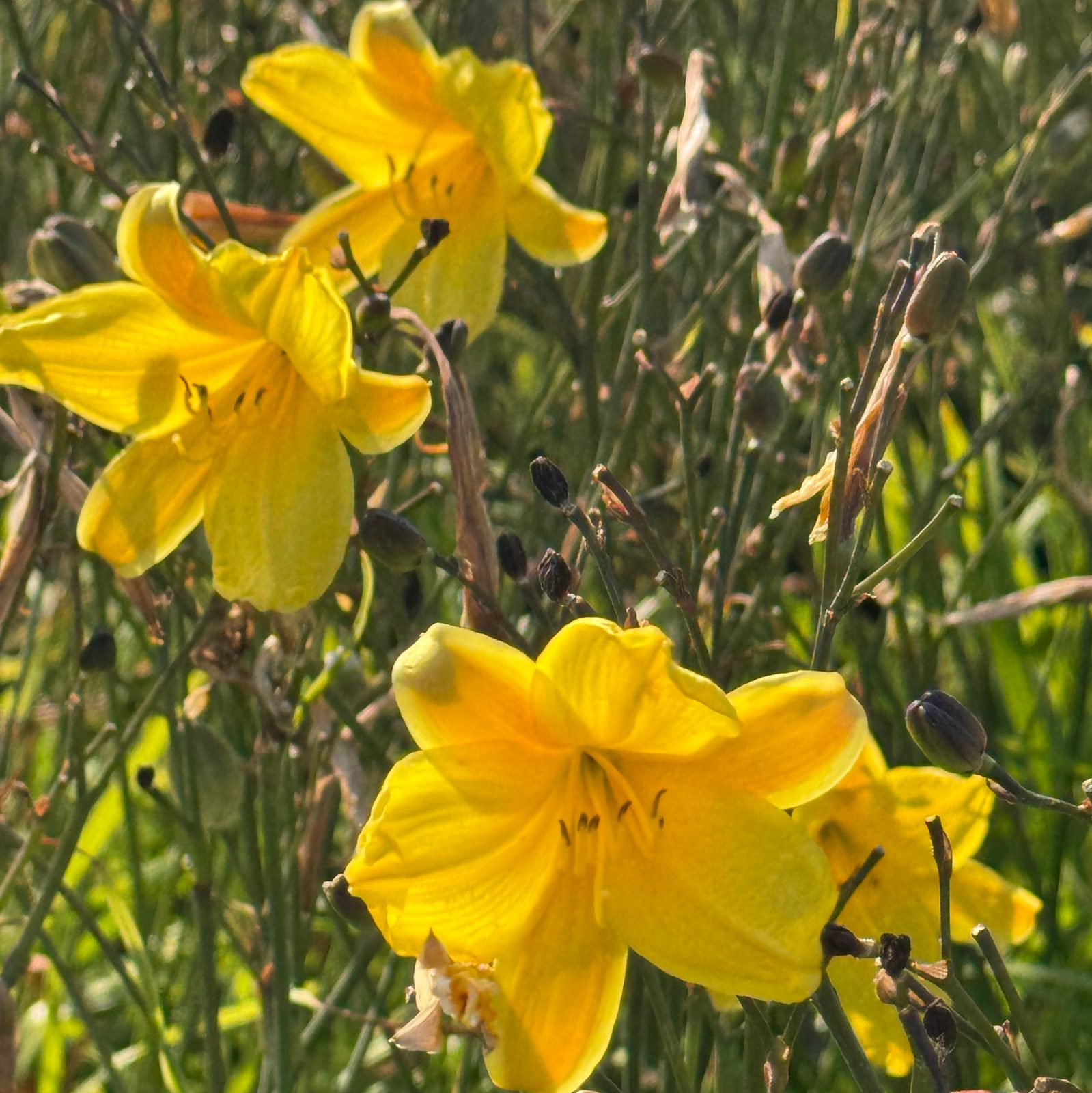
Hemerocallis 'Radiant Ruffles' is a clump forming herbaceous perennial in the genus Hemerocallis, part of the Asphodelaceae family, with semi evergreen foliage. Hemerocallis 'Radiant Ruffles' grows best in full sun and partial shade, and tolerates most soils and any pH. Its UK hardiness is rated H6. Suggested uses include coastal and cottage and informal garden.
About
Hemerocallis 'Radiant Ruffles' is a herbaceous perennial cultivar within the Hemerocallis genus, known for its clump-forming habit and semi-evergreen foliage. Like others in its genus, it produces funnel-shaped blooms on upright stems during summer. It thrives in fertile, moist but well-drained soils, tolerating a range of soil types and pH levels, and prefers full sun or partial shade, ideally in south- or west-facing aspects. This cultivar is hardy to UK zone H6 and is suitable for coastal, cottage, and informal gardens.
About the genus
A daylily, day lily or ditch-lily is a flowering plant in the genus Hemerocallis, a member of the family Asphodelaceae, subfamily Hemerocallidoideae, native to Asia. Despite the common name, it is not taxonomically classified in the lily genus. Gardening enthusiasts and horticulturists have long bred Hemerocallis species for their attractive flowers; a select few species of the genus have edible petals, while some are extremely toxic.
Wikipedia contributors, "Daylily", CC BY-SA 4.0 — Daylily
Growing conditions
Best soil and position for Hemerocallis
- Sunlight
- Full sun, Partial shade
- Soil type
- Chalk, Clay, Loam, Sand
- Soil pH
- Acid, Alkaline, Neutral
- Soil moisture
- Moist but well-drained
- Aspect
- South-facing, West-facing
- Exposure
- Exposed, Sheltered
- UK hardiness
- H6
Plant details
Hemerocallis 'Radiant Ruffles' size, habit and characteristics
- Plant type
- Herbaceous Perennial
- Habit
- Clump forming
- Foliage
- Semi evergreen
- Suggested uses
- Coastal, Cottage and informal garden
Care notes
Pruning and caring for Hemerocallis 'Radiant Ruffles'
- Propagation
- Propagate by division in early spring or early autumn
- Pest resistance
- May be susceptible to aphids, slugs, snails, hemerocallis gall midge, glasshouse red spider mite and Thrips
- Disease resistance
- May be susceptible to fungal leaf spot and rust diseases or bacterial leaf and stem rot
Frequently asked questions
Where is the best place to plant Hemerocallis 'Radiant Ruffles'?
Hemerocallis 'Radiant Ruffles' prefers full sun and partial shade. It suits exposed and sheltered positions.
What soil does Hemerocallis 'Radiant Ruffles' need?
Hemerocallis 'Radiant Ruffles' is adaptable and grows happily in most soil types, including chalk, clay, loam and sand. It is happy in soil of any pH. Aim for soil that stays moist but well-drained.
Is Hemerocallis 'Radiant Ruffles' hardy in the UK?
Hemerocallis 'Radiant Ruffles' has an RHS hardiness rating of H6, meaning it is very hardy, tolerating -20 to -15°C across most of the UK.
How do I propagate Hemerocallis 'Radiant Ruffles'?
Propagate by division in early spring or early autumn.
More in the Hemerocallis genus
- Hemerocallisdaylily

- Hemerocallis 'Alan'daylily 'Alan'

- Hemerocallis 'Cartwheels'daylily 'Cartwheels'

- Hemerocallis 'Corky'Daylily
- Hemerocallis 'Dorothy McDade'daylily 'Dorothy McDade'

- Hemerocallis 'Golden Chimes'daylily 'Golden Chimes'

- Hemerocallis 'A Groovy Kind of Love'Daylily
- Hemerocallis 'All the Magic'Daylily