Overview
Thuja koraiensis is a narrowly conical conifers in the genus Thuja, part of the Cupressaceae family, with evergreen foliage. Thuja koraiensis grows best in full sun, and tolerates loam soils and neutral pH. Its UK hardiness is rated H7. Suggested uses include hedges, screening and specimen planting.
About
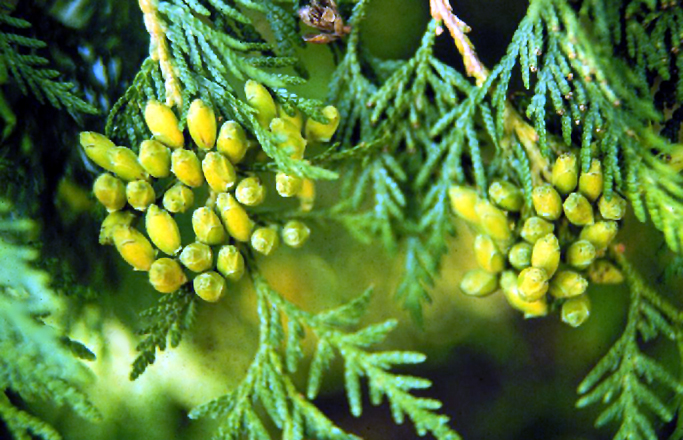
Thuja koraiensis, commonly known as Korean arborvitae or Korean thuja, is a narrowly conical evergreen tree belonging to the genus Thuja in the Cupressaceae family. Like other Thuja species, it features flat sprays of small, aromatic, scale-like foliage and produces small, knobby cones. This cultivar thrives in full sun and prefers moist but well-drained loam soil with a neutral pH. It is hardy to UK zone H7 and is suitable for hedges, screening, or specimen planting, particularly valued for its winter interest.
About the genus
Thuja is a genus of coniferous tree or shrub in the Cupressaceae. There are five species in the genus, two native to North America and three native to eastern Asia. The genus is monophyletic and sister to Thujopsis.
Wikipedia contributors, "Thuja", CC BY-SA 4.0 — Thuja
Growing conditions
Best soil and position for Thuja
- Sunlight
- Full sun
- Soil type
- Loam
- Soil pH
- Neutral
- Soil moisture
- Moist but well-drained
- Aspect
- South-facing, East-facing, West-facing
- Exposure
- Exposed, Sheltered
- UK hardiness
- H7
Plant details
Thuja koraiensis size, habit and characteristics
- Plant type
- Conifers, Trees
- Habit
- Narrowly conical
- Foliage
- Evergreen
- Suggested uses
- Hedges, Screening, Specimen planting
Care notes
Pruning and caring for Thuja koraiensis
- Propagation
- Semi-hardwood cuttings
- Pest resistance
- Scale insects, Conifer aphid
- Disease resistance
- Honey fungus, Thuja blight, Coryneum canker
Frequently asked questions
Where is the best place to plant Thuja koraiensis?
Thuja koraiensis prefers full sun. It suits exposed and sheltered positions.
What soil does Thuja koraiensis need?
Thuja koraiensis grows best in loam soil. It prefers neutral soil. Aim for soil that stays moist but well-drained.
Is Thuja koraiensis hardy in the UK?
Thuja koraiensis has an RHS hardiness rating of H7, meaning it is fully hardy throughout the UK, tolerating temperatures below -20°C.
How do I propagate Thuja koraiensis?
Semi-hardwood cuttings.
More in the Thuja genus
- Thuja occidentalis 'Smokey'Northern White-Cedar

- Thuja occidentalis 'Southport'Northern White-Cedar
- Thuja plicata 'Excelsa'western red cedar 'Excelsa'

- Thuja plicata 'Kager's Beauty'Western Redcedar