Overview
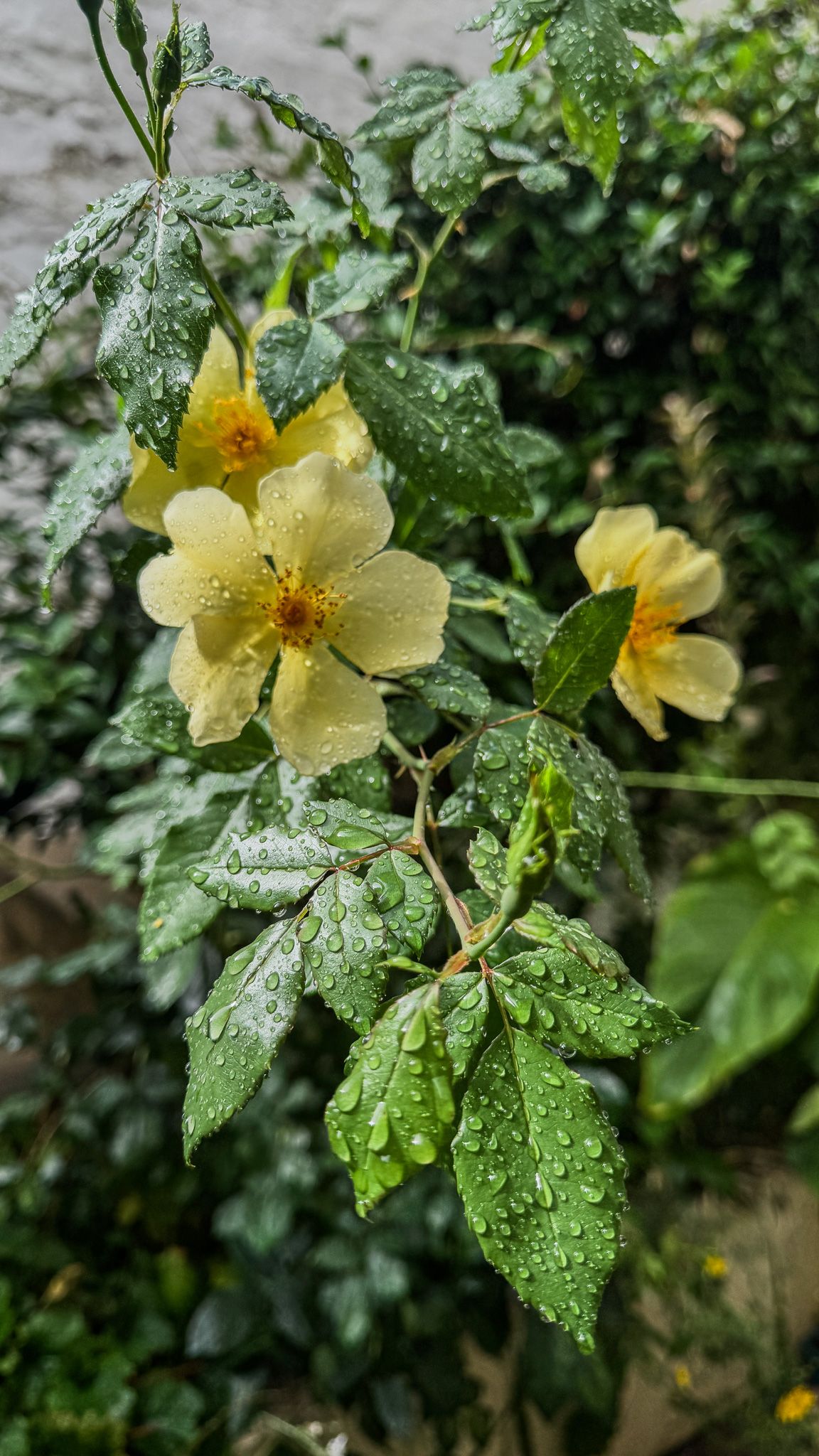
Rosa × damascena is a plant with a bushy, climbing habit in the genus Rosa, part of the Rosaceae family, with deciduous foliage. Rosa × damascena grows best in full sun, and tolerates most soils and any pH. Its UK hardiness is rated H5. Suggested uses include cottage and informal garden, wildlife gardens, climber and wall shrubs and wall side borders.
About
Rosa × damascena, more commonly known as the Damask rose, or sometimes as the Iranian Rose, Bulgarian rose, Taif rose, Emirati rose, Ispahan rose, Isparta rose, and Castile rose, is a rose hybrid derived from Rosa gallica and Rosa moschata. DNA analysis has shown that a third species, Rosa fedtschenkoana, made some genetic contributions to the Damask rose.
Wikipedia contributors, CC BY-SA 4.0 — Rosa × damascena
About the genus
A rose is either a woody perennial flowering plant of the genus Rosa, in the family Rosaceae, or the flower it bears. There are over three hundred species and tens of thousands of cultivars. The plants range in size and form, from trailing and erect shrubs to climbers up to 7 metres (23 ft) in height.
Wikipedia contributors, "Rose", CC BY-SA 4.0 — Rose
Growing conditions
Best soil and position for Rosa
- Sunlight
- Full sun
- Soil type
- Chalk, Clay, Loam, Sand
- Soil pH
- Acid, Alkaline, Neutral
- Soil moisture
- Moist but well-drained, Well-drained
- Aspect
- South-facing, West-facing, East-facing
- Exposure
- Sheltered
- UK hardiness
- H5
Plant details
Rosa × damascena size, habit and characteristics
- Habit
- Bushy, Climbing
- Foliage
- Deciduous
- Suggested uses
- Cottage and informal garden, Wildlife gardens, Climber and wall shrubs, Wall side borders
Care notes
Pruning and caring for Rosa × damascena
- Propagation
- Softwood cuttings in early to mid spring, Hardwood cuttings in late summer to autumn, Chip budding in summer, Seed propagation (species roses need stratification and may take two seasons to germinate)
- Pest resistance
- Aphids, Rose leafhopper, Glasshouse red spider mite, Scale insects, Caterpillars, Large rose sawfly, Rose slugworm sawfly, Rose leaf-rolling sawfly, Deer, Rabbits
- Disease resistance
- Rose black spot, Rose rust, Replant disease, Rose dieback, Rose powdery mildew, Honey fungus, Rose blindness, Flower balling
Frequently asked questions
Where is the best place to plant Rosa × damascena?
Rosa × damascena prefers full sun. It suits sheltered positions.
What soil does Rosa × damascena need?
Rosa × damascena is adaptable and grows happily in most soil types, including chalk, clay, loam and sand. It is happy in soil of any pH. Aim for soil that stays moist but well-drained to well-drained.
Is Rosa × damascena hardy in the UK?
Rosa × damascena has an RHS hardiness rating of H5, meaning it is hardy in most of the UK, tolerating -15 to -10°C.
How do I propagate Rosa × damascena?
Softwood cuttings in early to mid spring, Hardwood cuttings in late summer to autumn, Chip budding in summer, Seed propagation (species roses need stratification and may take two seasons to germinate).
More in the Rosa genus
- Rosa 'Barbara Richards' (HT)

- Rosa 'Gavotte' (HT)

- Rosa 'Réveil Dijonnais' (ClHT)

- Rosa 'Tottering-by-Gently' (Auscartoon)Rosa 'Tottering-by-Gently' = 'Auscartoon' (PBR)
- Rosa Cookie ('Meikousie')rose [Cookie]
![Rosa Cookie ('Meikousie') — rose [Cookie]](https://upload.wikimedia.org/wikipedia/commons/thumb/3/38/Rosa_%27Cookie%27_kz02.jpg/960px-Rosa_%27Cookie%27_kz02.jpg)
- Rosa 'Alpine Sunset' (HT)
- Rosa 'Ardoisée de Lyon' (HP)
- Rosa 'Chaplin's Pink Companion' (Cl)