Overview
Panicum virgatum is a perennial grass in the genus Panicum, part of the Poaceae family. It typically grows around 1.8 m tall. Panicum virgatum grows best in full sun, and tolerates sandy and loamy soils. Its UK hardiness is rated H2. Suggested uses include ornamental grass, erosion control and wildlife habitat. It is native to North America.
About
Panicum virgatum is a perennial grass that typically reaches about 1.8 m and is used for erosion control and wildlife habitat. It prefers full sun on sandy or loamy soils that are moist but well-drained. In the UK it carries an H2 rating, meaning it is half-hardy and best sited where winter exposure is limited. Flowering occurs from July to September.
Wikipedia contributors, CC BY-SA 4.0 — Panicum virgatum
About the genus
Panicum, commonly called panicgrass, is a large genus of about 250 species of grasses mostly native to tropical regions.
Wikipedia contributors, "Panicum", CC BY-SA 4.0 — Panicum
In the garden
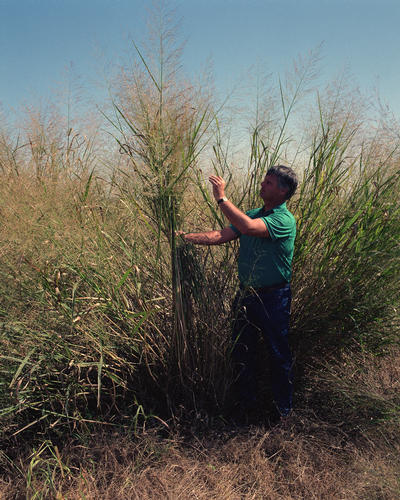
Panicum virgatum is a perennial grass native to North America, grown here for its height and structural presence. Plants commonly reach about 1.8 m and are valued as an ornamental grass as well as for erosion control and providing habitat for wildlife. Expect flowering from July to September. Give Panicum virgatum a sunny position and a free-draining sandy or loamy soil; it tolerates moisture but does not suit waterlogged ground. Its UK hardiness is H2, which translates as half-hardy — choose a sheltered spot away from exposed, frosty corners if you are in a colder or coastal garden. Avoid densely shaded sites to prevent flopping and poor flowering. Use this grass as a tall backdrop to herbaceous borders, on banks where its root mass helps control erosion, or in expanses for wildlife cover. Plants establish best in open, sunny planting schemes where they can form upright stems to their full height. Plants typically reach about 1.8 m and flower from July to September.
Growing conditions
Best soil and position for Panicum
- Sunlight
- Full sun
- Soil type
- Sandy, Loamy
- Soil moisture
- Well-drained, Moist but well-drained
- UK hardiness
- H2
Plant details
Panicum virgatum size, habit and characteristics
- Plant type
- Perennial grass
- Height
- 1.8 m
- Suggested uses
- Ornamental grass, Erosion control, Wildlife habitat
- Native to
- North America
Care notes
Pruning and caring for Panicum virgatum
- Cultivation
- Prefers full sun and well-drained soils; tolerates drought once established
- Pruning
- Cut back to ground level in late winter or early spring before new growth begins
- Propagation
- Seed, Division
Frequently asked questions
How do I grow Panicum virgatum?
Prefers full sun and well-drained soils; tolerates drought once established.
Where is the best place to plant Panicum virgatum?
Panicum virgatum prefers full sun.
What soil does Panicum virgatum need?
Panicum virgatum grows best in sandy and loamy soil. Aim for soil that stays well-drained to moist but well-drained.
How do I prune Panicum virgatum?
Cut back to ground level in late winter or early spring before new growth begins.
How big does Panicum virgatum grow?
Panicum virgatum reaches a height of 1.8 m.
Is Panicum virgatum hardy in the UK?
Panicum virgatum has an RHS hardiness rating of H2, meaning it is tender, tolerating 1–5°C, and needs frost-free protection over winter.
How do I propagate Panicum virgatum?
Seed, Division.
More in the Panicum genus
- Panicum 'Cloud Nine'Panicgrass

- Panicum Virgatum 'Blue Giants'Panicgrass

- Panicum virgatum 'Squaw'Switchgrass
- Panicum 'Cape Breeze'Panicgrass