Overview
Geranium platypetalum is a mound-forming or spreading perennial in the genus Geranium, part of the Geraniaceae family, with deciduous or semi-evergreen; rounded, palmately lobed, often aromatic foliage. Geranium platypetalum grows best in full sun to partial shade, and tolerates most soils and acid and neutral or alkaline pH. Its UK hardiness is rated H5–H7. Suggested uses include borders, rock gardens and ground cover. It is native to Caucasus and Turkey.
About
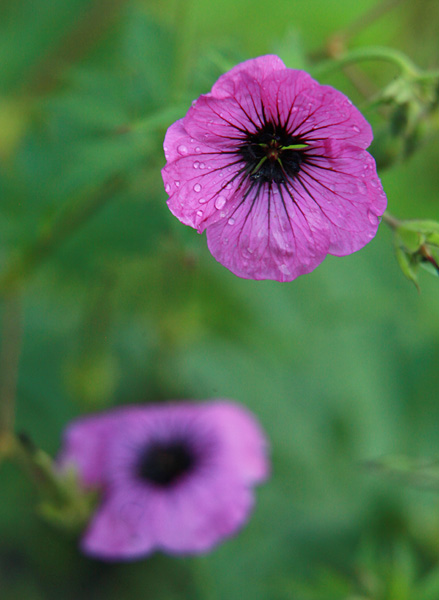
Geranium platypetalum is a perennial cranesbill prized for its broad, blue to purple flowers. It forms mound-forming or spreading patches of rounded, palmately lobed leaves that may be deciduous or semi-evergreen and are often aromatic. Flowers appear from June to September, carried above the foliage on open stalks. It is suited to a wide range of soils and positions in the garden.
Wikipedia contributors, CC BY-SA 4.0 — Geranium platypetalum
About the genus
Geranium is a genus of 422 species of annual, biennial, and perennial plants that are commonly known as geraniums, hardy geraniums, or cranesbills. They are found throughout the temperate regions of the world and the mountains of the tropics, with the greatest diversity in the eastern part of the Mediterranean region.
Wikipedia contributors, "Geranium", CC BY-SA 4.0 — Geranium
In the garden
Geranium platypetalum is a perennial in the Geraniaceae native to the Caucasus and Turkey. The plant produces broad, blue to purple petals on open flowering stalks above a mound-forming or spreading rosette of rounded, palmately lobed leaves; foliage can be deciduous or semi-evergreen and is often aromatic. Flowering runs from June to September. Plant in full sun to partial shade in a well-drained but not parched soil; it tolerates loam, chalk, sand or clay and copes with acid, neutral or alkaline pH. Aspect is flexible — any aspect is acceptable — and it will tolerate both exposed and sheltered positions. Hardiness ranges H5–H7, described as hardy to fully hardy, and corresponds with USDA zones 4–9, so it survives UK winters across most regions when planted in a suitable site. Use Geranium platypetalum at the front of borders, in rock gardens or as a ground-covering drift where a low, spreading habit is wanted. Allow room for it to spread and combine with taller perennials or gravelly planting for contrast. Flowers are carried from June to September on stalks above the palmately lobed leaves, providing a reliable summer display.
Growing conditions
Best soil and position for Geranium
- Sunlight
- Full sun to partial shade
- Soil type
- Almost any reasonable soil — loam, chalk, sand or clay
- Soil pH
- Acid, neutral or alkaline
- Soil moisture
- Well drained but not parched
- Aspect
- Any
- Exposure
- Exposed or sheltered
- UK hardiness
- H5–H7
Plant details
Geranium platypetalum size, habit and characteristics
- Plant type
- Perennial
- Habit
- Mound-forming or spreading
- Foliage
- Deciduous or semi-evergreen; rounded, palmately lobed, often aromatic
- Suggested uses
- Borders, rock gardens, ground cover
- Native to
- Caucasus, Turkey
Care notes
Pruning and caring for Geranium platypetalum
- Cultivation
- Among the least demanding of perennials, asking only for reasonable drainage and an open position. Shear the whole plant back hard after the first flush and water it in; most kinds then produce fresh foliage and a second showing by late summer.
- Pruning
- Cut back to a low framework after the first flowering to renew the foliage and prompt repeat bloom. Tidy any remaining growth in late autumn or early spring.
- Propagation
- Divide in spring or autumn. Many species self-seed freely, and basal cuttings suit cultivars that resent disturbance.
- Pest resistance
- Largely untroubled, though vine weevil grubs attack the roots of container plants and sawfly larvae occasionally strip leaves.
- Disease resistance
- Powdery mildew and rust may appear on congested plants in a dry summer; shearing back usually resolves both.
Frequently asked questions
How do I grow Geranium platypetalum?
Among the least demanding of perennials, asking only for reasonable drainage and an open position. Shear the whole plant back hard after the first flush and water it in; most kinds then produce fresh foliage and a second showing by late summer.
Where is the best place to plant Geranium platypetalum?
Geranium platypetalum prefers full sun to partial shade. It suits exposed or sheltered positions.
What soil does Geranium platypetalum need?
Geranium platypetalum is adaptable and grows happily in most soil types, including almost any reasonable soil — loam, chalk and sand or clay. It prefers acid and neutral or alkaline soil. Aim for soil that stays well drained but not parched.
How do I prune Geranium platypetalum?
Cut back to a low framework after the first flowering to renew the foliage and prompt repeat bloom. Tidy any remaining growth in late autumn or early spring.
Is Geranium platypetalum hardy in the UK?
Geranium platypetalum has an RHS hardiness rating of H5, meaning it is hardy in most of the UK, tolerating -15 to -10°C.
How do I propagate Geranium platypetalum?
Divide in spring or autumn. Many species self-seed freely, and basal cuttings suit cultivars that resent disturbance.
More in the Geranium genus
- Geranium 'Blue Cloud'

- Geranium 'Brookside'Geranium

- Geranium 'Claridge Druce'Crane's Bill

- Geranium 'Johnson's Blue'Johnson's Blue Cranesbill

- Geranium 'Nimbus'Geranium

- Geranium 'Orion'

- Geranium 'Patricia'
- Geranium 'Purple Rain'cranesbill 'Purple Rain'
