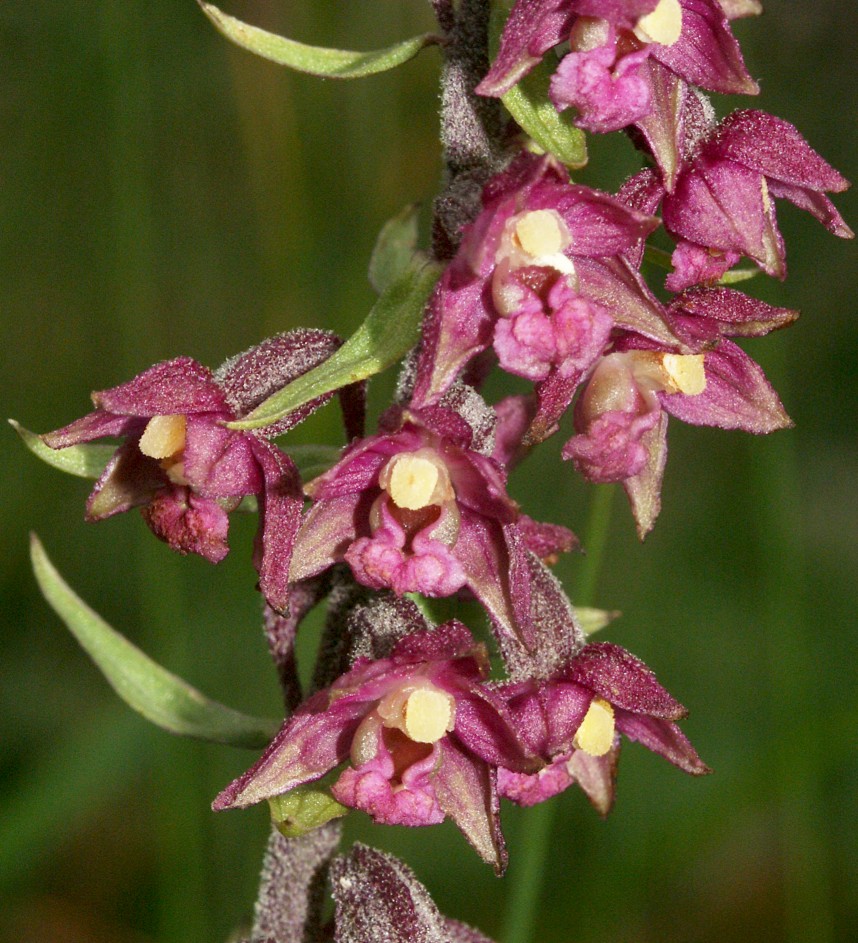
Overview
Epipactis helleborine is a orchid in the genus Epipactis, part of the Orchid family. Epipactis helleborine grows best in partial shade and shade, and tolerates most soils and neutral to alkaline pH. Its UK hardiness is rated H4. It is native to NW Africa Europe to China.
About the genus
Epipactis, or helleborine, is a genus of terrestrial orchids consisting of approximately 70 species. This genus is abbreviated as Epcts in horticultural trade.
Wikipedia contributors, "Epipactis", CC BY-SA 4.0 — Epipactis
In the garden
Epipactis helleborine is an orchid native from NW Africa across Europe to China, and it belongs to the genus Epipactis within the Orchidaceae family. In the UK it is valued where shade and steady moisture coincide; the flowers are mildly sweet-scented and appear in July–August. Give this helleborine partial shade or shade and a neutral to alkaline soil that stays moist but drains reasonably well. It tolerates loamy and sandy substrates; heavy waterlogging should be avoided. Its hardiness is H4, so it tolerates average UK winters but favours sheltered, frost-moderate corners rather than exposed sites. Plant where light levels are lower than open sun: shady borders, the edges of deciduous planting or among taller perennials that do not crowd the ground. Keep soil conditions consistent through summer to support flowering in July–August, and avoid re-potting or excessive soil disturbance once established. The combination of summer bloom and a mild, sweet aroma makes Epipactis helleborine a distinctive choice for shaded parts of a garden where neutral to alkaline, moist soils are present.
Growing conditions
Best soil and position for Epipactis
- Sunlight
- partial shade, shade
- Soil type
- well-drained, loamy, sandy
- Soil pH
- neutral to alkaline
- Soil moisture
- moist
- UK hardiness
- H4
Plant details
Epipactis helleborine size, habit and characteristics
- Plant type
- Orchid
- Native to
- NW Africa Europe to China
- Fragrance
- mild, sweet
Care notes
Pruning and caring for Epipactis helleborine
- Cultivation
- Prefers shaded or semi-shaded woodland conditions; avoid waterlogged soils; can tolerate some disturbance
- Propagation
- Seed, division
Frequently asked questions
How do I grow Epipactis helleborine?
Prefers shaded or semi-shaded woodland conditions; avoid waterlogged soils; can tolerate some disturbance.
Where is the best place to plant Epipactis helleborine?
Epipactis helleborine prefers partial shade and shade.
What soil does Epipactis helleborine need?
Epipactis helleborine is adaptable and grows happily in most soil types, including well-drained, loamy and sandy. It prefers neutral to alkaline soil. Aim for soil that stays moist.
Is Epipactis helleborine hardy in the UK?
Epipactis helleborine has an RHS hardiness rating of H4, meaning it is hardy through an average UK winter, tolerating -10 to -5°C.
How do I propagate Epipactis helleborine?
Seed, division.
From the Fenn Plants journal
- Notes on DaffodilsWhen to plant daffodil bulbs in the UK, how deep, how to naturalise them in grass, why daffodils stop flowering (“blindness”), and why you should never mix cut daffodils with other flowers.
- Keeping Your NerveHow to garden through a heatwave — the best time to water, why deep soaks beat daily sprinkles, caring for pots and vulnerable plants, and why you can let the lawn go brown.
- Made to LastHow to clean, store and protect garden pots and planters — the frost-proof vs frost-resistant difference, winter care for terracotta and ceramic, and how to reuse a broken pot.