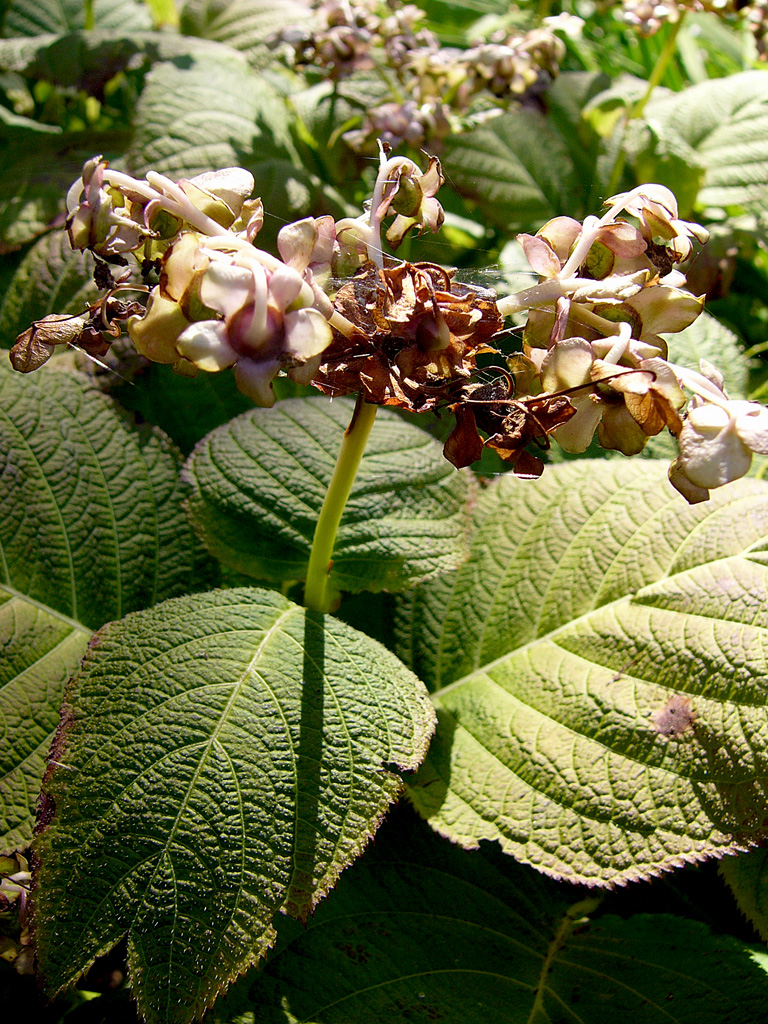
Overview
Deinanthe caerulea is a herbaceous perennial in the genus Deinanthe, part of the Hydrangeaceae family. Deinanthe caerulea grows best in partial shade, and tolerates moist and well-drained soils. Its UK hardiness is rated H5. Suggested uses include shade garden and woodland garden. It is native to Japan.
About the genus
Deinanthe is a genus consisting of a few species of rare herbaceous-habit rhizomatous plants found in the mountain woodlands of East Asia, ranging from China to Japan. They are handsome clump-forming perennials good for shade, woodland and rock gardens.
In the garden
Deinanthe caerulea belongs to the Hydrangeaceae and is native to Japan. As a herbaceous perennial it is suited to cooler, sheltered parts of the garden where direct sun is limited. The genus identity is useful when considering related plants that share a preference for shade and moisture. Choose a site in partial shade with soil that remains moist yet drains well; avoidance of exposed, windy positions will suit the plant’s sheltered exposure requirement. The H5 hardiness rating means it is classed as hardy in UK terms, so it can remain planted outdoors through typical winters without special winter protection. Keep soil consistently damp rather than allowing it to dry out between waterings. Deinanthe caerulea works best in shade gardens and woodland-style borders where evening and dappled light prevail. Position it where root-zone moisture can be maintained and where shelter from strong winds is available, for example beneath higher canopy plants or alongside shaded paths. Planting it in locations that match these conditions will make best use of its partial-shade and moisture preferences.
Growing conditions
Best soil and position for Deinanthe
- Sunlight
- partial shade
- Soil type
- moist, well-drained
- Soil moisture
- moist
- Exposure
- sheltered
- UK hardiness
- H5
Plant details
Deinanthe caerulea size, habit and characteristics
- Plant type
- herbaceous perennial
- Suggested uses
- shade garden, woodland garden
- Native to
- Japan
Care notes
Pruning and caring for Deinanthe caerulea
- Cultivation
- Prefers humus-rich, moist soil in shaded or semi-shaded locations. Avoid direct hot sun.
- Pruning
- Remove dead or damaged foliage after flowering.
- Propagation
- Division in spring or autumn, seed propagation possible but slow.
Frequently asked questions
How do I grow Deinanthe caerulea?
Prefers humus-rich, moist soil in shaded or semi-shaded locations. Avoid direct hot sun.
Where is the best place to plant Deinanthe caerulea?
Deinanthe caerulea prefers partial shade. It suits sheltered positions.
What soil does Deinanthe caerulea need?
Deinanthe caerulea grows best in moist and well-drained soil. Aim for soil that stays moist.
How do I prune Deinanthe caerulea?
Remove dead or damaged foliage after flowering.
Is Deinanthe caerulea hardy in the UK?
Deinanthe caerulea has an RHS hardiness rating of H5, meaning it is hardy in most of the UK, tolerating -15 to -10°C.
How do I propagate Deinanthe caerulea?
Division in spring or autumn, seed propagation possible but slow.
From the Fenn Plants journal
- Notes on DaffodilsWhen to plant daffodil bulbs in the UK, how deep, how to naturalise them in grass, why daffodils stop flowering (“blindness”), and why you should never mix cut daffodils with other flowers.
- Keeping Your NerveHow to garden through a heatwave — the best time to water, why deep soaks beat daily sprinkles, caring for pots and vulnerable plants, and why you can let the lawn go brown.
- Made to LastHow to clean, store and protect garden pots and planters — the frost-proof vs frost-resistant difference, winter care for terracotta and ceramic, and how to reuse a broken pot.