Overview
Campanula trachelium is a clump-forming, mat-forming or upright depending on species perennial in the genus Campanula, part of the Campanulaceae family, with deciduous or semi-evergreen; basal rosettes of rounded or heart-shaped leaves, narrower up the stem foliage. Campanula trachelium grows best in full sun to partial shade, and tolerates loam and chalk or sand; most tolerate poor soils soils and neutral to alkaline pH. Its UK hardiness is rated H5-H7. Suggested uses include borders, wildflower gardens and naturalizing. It is native to Europe and N Africa & Sib..
About
Campanula trachelium is a perennial nettle-leaved bellflower that forms clumps with basal rosettes and progressively narrower leaves up the flowering stems. It flowers from June to September. The plant prefers full sun to partial shade on loam, chalk or sandy soils that are neutral to alkaline and kept moist but well drained. Hardy in most UK situations (H5–H7), it tolerates exposed or sheltered sites but should be avoided in deep shade.
Wikipedia contributors, CC BY-SA 4.0 — Campanula trachelium
About the genus
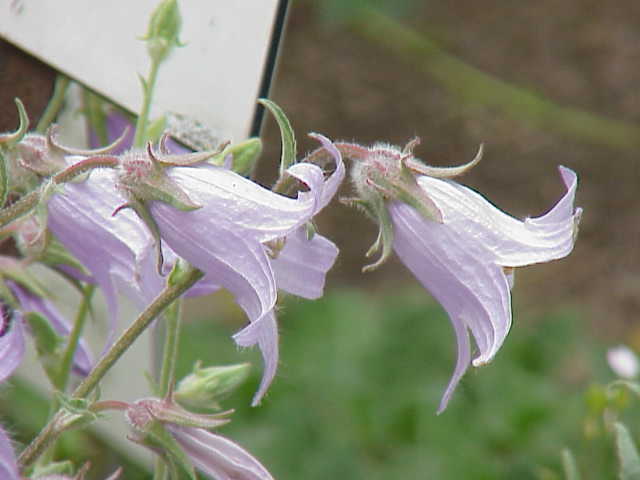
Campanula is the type genus of the Campanulaceae family of flowering plants. Campanula are commonly known as bellflowers and take both their common and scientific names from the bell-shaped flowers—campanula is Latin for "little bell".
Wikipedia contributors, "Campanula", CC BY-SA 4.0 — Campanula
In the garden
Campanula trachelium sits in the Campanulaceae and is native across Europe, north Africa and Siberia. As a perennial it typically produces basal rosettes of rounded or heart-shaped leaves with narrower, toothed leaves higher on the stem; habit ranges from clump-forming to more upright depending on the stock. It flowers from June to September, offering a clear mid- to late-summer display in the garden. Grow it in full sun to partial shade on loam, chalk or sandy soils; plants tolerate poorer soils but prefer neutral to alkaline pH and a moisture regime that is moist yet well drained. Alpine or rock-garden forms need much sharper drainage. Aspect can be any position except deep shade, and the species will handle both exposed and sheltered sites. Hardiness falls between H5 and H7, so it is broadly hardy across the UK. Use Campanula trachelium in mixed borders, naturalised drifts or wildflower areas where a clump-forming perennial is required. It suits informal sites where plants can spread naturally, and its June–September flowering window helps bridge the summer months in mixed plantings.
Growing conditions
Best soil and position for Campanula
- Sunlight
- Full sun to partial shade
- Soil type
- Loam, chalk or sand; most tolerate poor soils
- Soil pH
- Neutral to alkaline
- Soil moisture
- Moist but well drained; alpine kinds need sharp drainage
- Aspect
- Any except deep shade
- Exposure
- Exposed or sheltered
- UK hardiness
- H5-H7
Plant details
Campanula trachelium size, habit and characteristics
- Plant type
- Perennial
- Habit
- Clump-forming, mat-forming or upright depending on species
- Foliage
- Deciduous or semi-evergreen; basal rosettes of rounded or heart-shaped leaves, narrower up the stem
- Suggested uses
- Borders, wildflower gardens, naturalizing
- Native to
- Europe, N Africa & Sib.
Care notes
Pruning and caring for Campanula trachelium
- Cultivation
- Undemanding given drainage and a reasonably open position. The taller border kinds are worth supporting early, since heavy rain will flatten a flowering stem and it will not lift again. Deadheading extends the season considerably, and the vigorous spreading species are best sited where they can run without swamping smaller neighbours.
- Pruning
- Cut flowered stems back to basal growth to encourage a second, lighter flush. Tidy remaining foliage in late autumn, or leave the rosettes intact over winter on alpine kinds.
- Propagation
- Divide in spring or autumn, and take basal cuttings in spring for named cultivars. Species come readily from seed sown fresh, and several self-sow where conditions suit.
- Pest resistance
- Slugs and snails are the real problem, particularly on emerging spring growth and on alpine rosettes.
- Disease resistance
- Generally healthy; rust and powdery mildew appear on crowded or drought-stressed plants.
Frequently asked questions
How do I grow Campanula trachelium?
Undemanding given drainage and a reasonably open position. The taller border kinds are worth supporting early, since heavy rain will flatten a flowering stem and it will not lift again. Deadheading extends the season considerably, and the vigorous spreading species are best sited where they can run without swamping smaller neighbours.
Where is the best place to plant Campanula trachelium?
Campanula trachelium prefers full sun to partial shade. It suits exposed or sheltered positions.
What soil does Campanula trachelium need?
Campanula trachelium grows best in loam and chalk or sand; most tolerate poor soils soil. It prefers neutral to alkaline soil. Aim for soil that stays moist but well drained; alpine kinds need sharp drainage.
How do I prune Campanula trachelium?
Cut flowered stems back to basal growth to encourage a second, lighter flush. Tidy remaining foliage in late autumn, or leave the rosettes intact over winter on alpine kinds.
Is Campanula trachelium hardy in the UK?
Campanula trachelium has an RHS hardiness rating of H5, meaning it is hardy in most of the UK, tolerating -15 to -10°C.
How do I propagate Campanula trachelium?
Divide in spring or autumn, and take basal cuttings in spring for named cultivars. Species come readily from seed sown fresh, and several self-sow where conditions suit.
More in the Campanula genus
- Campanula lactiflora 'Alba'Milky Bellflower

- Campanula poscharskyana 'Stella'Serbian Bellflower

- Campanula rotundifolia 'Thumbell White'Harebell

- Campanula sarmaticaBellflower
- Campanula sulphureaYellow Bellflower

- Campanula 'Burghaltii'bellflower 'Burghaltii'
- Campanula 'Maie Blyth'Bellflower
- Campanula lact. 'Loddon Anna'