Overview
Campanula lactiflora 'Alba' is a plant with a mat-forming, dwarf perennials, tall herbaceous species habit in the genus Campanula, part of the Campanulaceae family, with deciduous, evergreen foliage. Campanula lactiflora 'Alba' grows best in full sun and partial shade, and tolerates loam and sand soils and any pH. Its UK hardiness is rated H5, H6, H7. Suggested uses include borders, rockeries, containers and ground cover.
About
Campanula lactiflora 'Alba' is a Campanula with clusters of white bells that flower from June to September. The cultivar shows a range of habits, from mat-forming dwarf types to taller herbaceous stems. Foliage may be deciduous or evergreen according to growing conditions. It suits sheltered, sun to part-shade positions in moist, well-drained soils.
About the genus
Campanula is the type genus of the Campanulaceae family of flowering plants. Campanula are commonly known as bellflowers and take both their common and scientific names from the bell-shaped flowers—campanula is Latin for "little bell".
Wikipedia contributors, "Campanula", CC BY-SA 4.0 — Campanula
In the garden
Campanula lactiflora 'Alba' is a member of the Campanulaceae valued for its clear white flower clusters through the main summer months. The species has origins in mountain regions and the cultivar retains a mixed habit, appearing as low, mat-forming clumps in some situations and producing taller, branching stems in others. Give 'Alba' a sunny or lightly shaded spot with loam or sandy soil that remains moist but drains freely; it tolerates a wide pH range from acid to alkaline. Best performance comes in sheltered aspects facing south, east or west where winter exposure is limited. The plant is rated H5–H7, so it will establish across the typical UK hardiness bands from hardy to fully hardy. Use 'Alba' in herbaceous borders, rockeries, containers or as a ground cover where its white blooms can be appreciated. Regular spacing helps prevent crowding where taller forms develop. Placed in a sheltered, south- or west-facing border, Campanula lactiflora 'Alba' will carry its white flowers through June to September.
Growing conditions
Best soil and position for Campanula
- Sunlight
- Full sun, Partial shade
- Soil type
- Loam, Sand
- Soil pH
- Acid, Neutral, Alkaline
- Soil moisture
- Moist but well-drained
- Aspect
- South-facing, East-facing, West-facing
- Exposure
- Sheltered
- UK hardiness
- H5, H6, H7
Plant details
Campanula lactiflora 'Alba' size, habit and characteristics
- Habit
- Mat-forming, Dwarf perennials, Tall herbaceous species
- Foliage
- Deciduous, Evergreen
- Suggested uses
- Borders, Rockeries, Containers, Ground cover
Care notes
Pruning and caring for Campanula lactiflora 'Alba'
- Propagation
- Seed, Division, Basal cuttings
- Pest resistance
- Slugs, Snails, Aphids
- Disease resistance
- Powdery mildew, Rust, Leaf spot
Frequently asked questions
Where is the best place to plant Campanula lactiflora 'Alba'?
Campanula lactiflora 'Alba' prefers full sun and partial shade. It suits sheltered positions.
What soil does Campanula lactiflora 'Alba' need?
Campanula lactiflora 'Alba' grows best in loam and sand soil. It is happy in soil of any pH. Aim for soil that stays moist but well-drained.
Is Campanula lactiflora 'Alba' hardy in the UK?
Campanula lactiflora 'Alba' has an RHS hardiness rating of H5, meaning it is hardy in most of the UK, tolerating -15 to -10°C.
How do I propagate Campanula lactiflora 'Alba'?
Seed, Division, Basal cuttings.
More in the Campanula genus
- Campanula poscharskyana 'Stella'Serbian Bellflower

- Campanula rotundifolia 'Thumbell White'Harebell

- Campanula sarmaticaBellflower
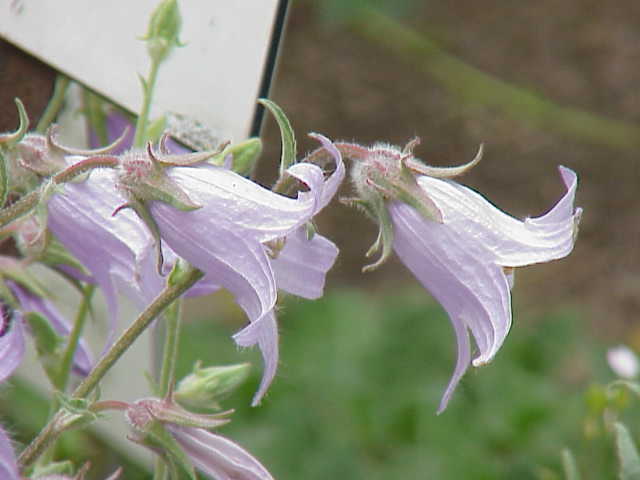
- Campanula sulphureaYellow Bellflower

- Campanula 'Burghaltii'bellflower 'Burghaltii'
- Campanula 'Maie Blyth'Bellflower
- Campanula lact. 'Loddon Anna'
- Campanula lact. 'Pritchard's Var.'