Overview
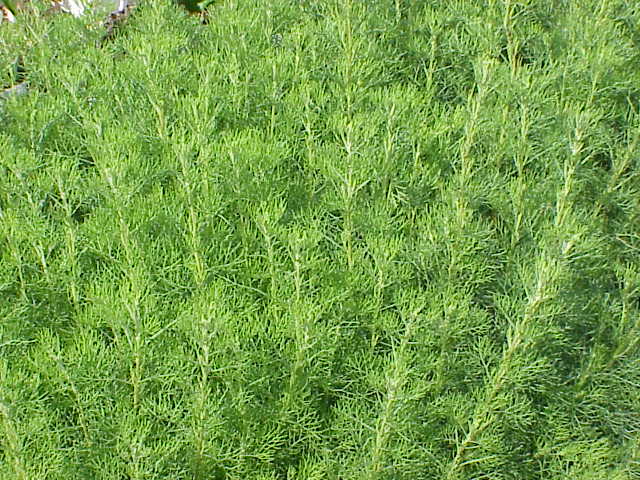
Artemisia dracunculus is a bushy, columnar upright, spreading branched, matforming perennial herb in the genus Artemisia, part of the Asteraceae family, with deciduous foliage. It typically grows around 0.6 m tall. Artemisia dracunculus grows best in full sun, and tolerates sandy and loamy soils and any pH. Its UK hardiness is rated H7. Suggested uses include culinary and medicinal. It is native to Afghanistan, Alberta, Altay, Amur, Arizona, Baltic States, Belarus, Borneo, British Columbia, Buryatiya, California and Central European Russia.
About
Tarragon, also known as estragon, is a species of perennial herb in the family Asteraceae. It is widespread in the wild across much of Eurasia and North America and is cultivated for culinary and medicinal purposes.
Wikipedia contributors, CC BY-SA 4.0 — Tarragon
About the genus
Artemisia is a large, diverse genus of plants belonging to the daisy family, Asteraceae, with almost 500 species. Common names for various species in the genus include mugwort, wormwood, and sagebrush.
Wikipedia contributors, "Artemisia (plant)", CC BY-SA 4.0 — Artemisia (plant)
Growing conditions
Best soil and position for Artemisia
- Sunlight
- Full sun
- Soil type
- Sandy, Loamy
- Soil pH
- Acid, Alkaline, Neutral
- Soil moisture
- Well-drained, Moist but well-drained
- Aspect
- South-facing, West-facing
- Exposure
- Full sun
- UK hardiness
- H7
Plant details
Artemisia dracunculus size, habit and characteristics
- Plant type
- Perennial herb
- Habit
- Bushy, Columnar upright, Spreading branched, Matforming
- Foliage
- Deciduous
- Height
- 0.6 m
- Suggested uses
- Culinary, Medicinal
- Native to
- Afghanistan, Alberta, Altay, Amur, Arizona, Baltic States, Belarus, Borneo, British Columbia, Buryatiya, California, Central European Russia
- Fragrance
- Anise-like, Licorice-like
Care notes
Pruning and caring for Artemisia dracunculus
- Propagation
- Seed, Cuttings, Division
- Pest resistance
- Generally pest-free
- Disease resistance
- Honey fungus
Frequently asked questions
Where is the best place to plant Artemisia dracunculus?
Artemisia dracunculus prefers full sun. It suits full sun positions.
What soil does Artemisia dracunculus need?
Artemisia dracunculus grows best in sandy and loamy soil. It is happy in soil of any pH. Aim for soil that stays well-drained to moist but well-drained.
How big does Artemisia dracunculus grow?
Artemisia dracunculus reaches a height of 0.6 m.
Is Artemisia dracunculus hardy in the UK?
Artemisia dracunculus has an RHS hardiness rating of H7, meaning it is fully hardy throughout the UK, tolerating temperatures below -20°C.
How do I propagate Artemisia dracunculus?
Seed, Cuttings, Division.
More in the Artemisia genus
- Artemisia 'Coca Cola'
- Artemisia 'Valerie Finnis'

- Artemisia Pontica Roman Wormwood

- Artemisia lactiflora 'Elfenbein'White Mugwort

- Artemisia schmidtiana 'Nana'Silver Mound

- Artemisia 'Boughton Silver'
- Artemisia Indica var. Momiyamae